NEWS

24 Oct 2023 - Australian Secure Capital Fund - Market Update
|
Australian Secure Capital Fund - Market Update Australian Secure Capital Fund October 2023
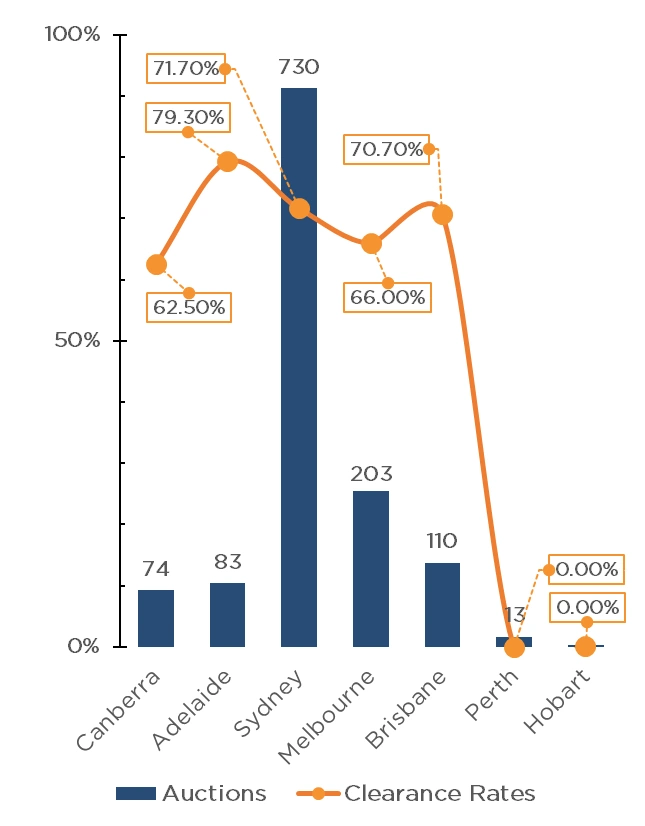
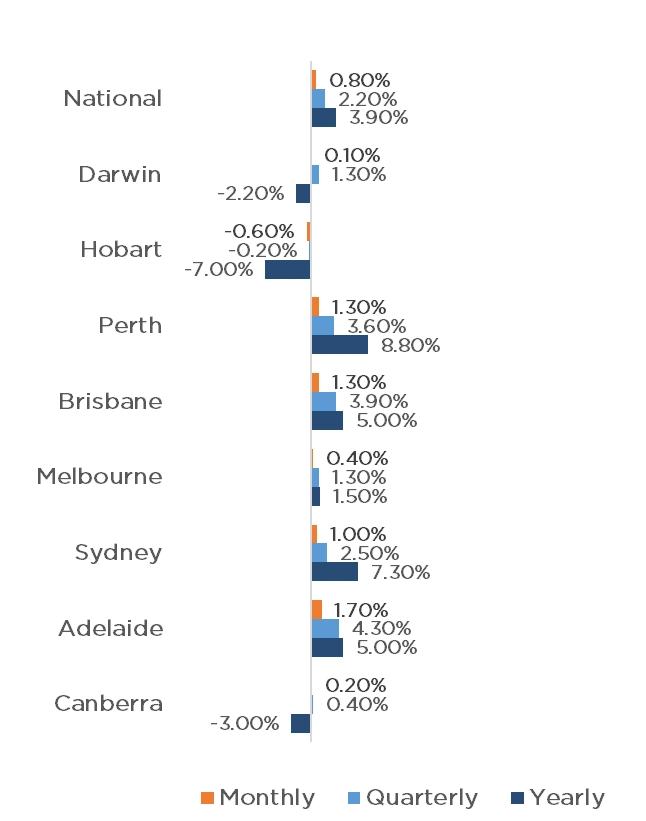
The first weekend of October saw the number of auctions decline significantly on the previous week (1215, down from 2,648), as is common on long weekends, caused by the AFL Public Holiday and the King's Birthday. Sydney recorded the most auctions of the capital cities, with 730 taking place, followed by Melbourne and Brisbane with 203 and 110 respectively. Adelaide and Canberra just missed out on triple digit figures, with 83 and 74 respectively, whilst just 13 and 2 auctions occurred in Perth and Tasmania respectively. Whilst the number of auctions declined for the week, clearance rates remained strong at 70.3% across the combined capitals (up from 59.7% last year). This was driven by Adelaide, Sydney and Brisbane all recording above 70% clearance rates with 79.3%, 71.7% and 70.7% respectively. Melbourne and Canberra also had moderate clearance rates of 66.0% and 62.5% respectively. The property market continued to grow yet again with a 0.8% rise for the month of September, taking quarterly growth to 2.2%. Adelaide experienced the largest monthly growth of 1.7%, followed by Brisbane and Perth with 1.3% each. Sydney, Melbourne, Canberra and Darwin all experienced growth with 1%, 0.3%, 0.2% and 0.1% respectively, whilst Hobart was the only capital city to fall in September with -0.6%. Quarterly data is similar, again with Adelaide leading the way (4.3%), closely followed by Brisbane (3.9%), Perth (3.6%) and Sydney (2.5%). Melbourne and Darwin both increased 1.3% for the quarter, with Canberra at 0.4%. Again, Hobart is the only capital to not experience growth, falling by 0.2% for the quarter. Whilst many economists predicted a softening in property prices in the later stages of 2023, dwelling values have remained strong. As we head into the spring and summer selling season, we may see supply increase slightly but the market remains extremely tight. Clearance Rates & Auctions Week of the 3rd of October 2023
Property Values as of 2nd of October 2023
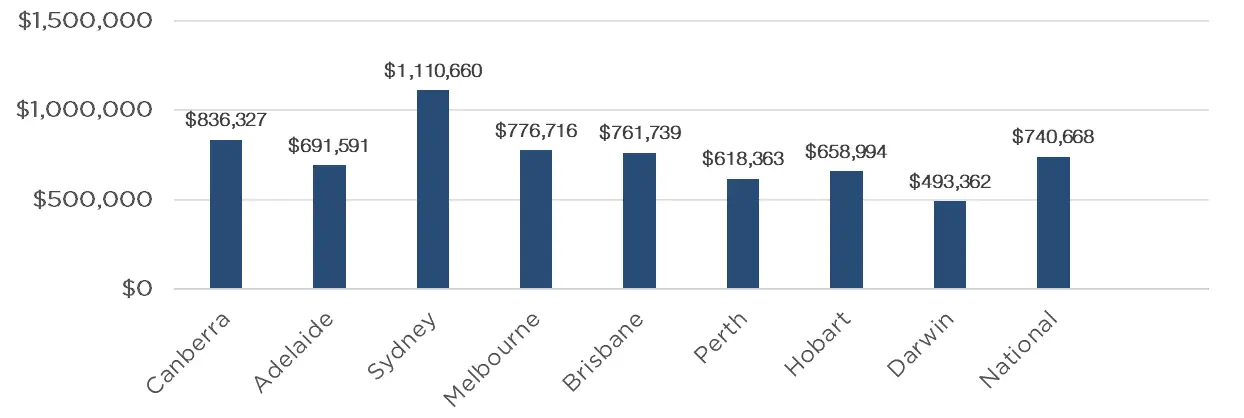
Median Dwelling Values as of 2nd of October 2023
|

23 Oct 2023 - Performance Report: 4D Global Infrastructure Fund (Unhedged)
[Current Manager Report if available]

23 Oct 2023 - Investment Perspectives: The housing fate from interest rates

20 Oct 2023 - Hedge Clippings | 20 October 2023
|
|
|
|
Hedge Clippings | 20 October 2023 Last week Hedge Clippings noted that "Central Bank Speak" involves the specialised art of covering all bases and potential outcomes, whilst not actually confirming what you're really thinking, or going to do. The exception of course is when they actually raise or cut rates, in which case they refer you back to their previous comments, and basically say "I told you so", or "don't say we didn't warn you." So while US markets are tossing up between rates staying as they are, or possibly rising one more time, Jerome Powell's overnight comment that "a range of uncertainties, both old and new complicate our task of balancing the risk of tightening monetary policy too much, against the risk of tightening too little" didn't actually say anything we didn't know, except they haven't made their mind up yet. To be fair to Powell, and the RBA's Michele Bullock if it comes to that, the US economy is evenly poised, balanced between trying to re-bottle inflation to get it back to the 2% target, maintaining sufficient growth and employment, and without risking "unnecessary harm to the economy" as he puts it. Powell's problem is that achieving both is a very difficult balancing act. The market is currently betting on the Fed holding the line at their upcoming meeting at the end of this month, but has no such certainty looking forward to December. Back home, the ABS released their Australian labour force figures, and on the surface, little had changed. Unemployment decreased fractionally on seasonally adjusted terms to 3.6%, with total employment edging up by just 6,600 but with full-time jobs decreasing by 39,900 offset by part-time jobs increasing by 46,500. The RBA wouldn't have been too pleased with those numbers in their efforts to return the cash rate to their preferred 2-3% target band, having previously indicated that unemployment around 4.5% is necessary to cool the economy, and thereby tame inflation. Next week's September CPI figure, due on Wednesday, followed by PPI results on Friday, will give a clearer picture of the outlook. Meanwhile, the minutes of the RBA's September meeting revealed the board didn't consider a rate cut as an option - it was either leave rates as they are, or increase them by 0.25%. That's likely to be the case again at their next meeting due on Cup Day. At this stage, we'd still favour an extension of the "pause" but wouldn't want to bet the house on it. As the previous governor was keen to say, "it's a very narrow path." News & Insights 10k Words | October 2023 | Equitable Investors Market Commentary | Glenmore Asset Management September 2023 Performance News Delft Partners Global High Conviction Strategy Quay Global Real Estate Fund (Unhedged) Digital Asset Fund (Digital Opportunities Class) |
|
|
If you'd like to receive Hedge Clippings direct to your inbox each Friday |

20 Oct 2023 - Performance Report: Emit Capital Climate Finance Equity Fund
[Current Manager Report if available]

20 Oct 2023 - Performance Report: Bennelong Concentrated Australian Equities Fund
[Current Manager Report if available]

19 Oct 2023 - Performance Report: DS Capital Growth Fund
[Current Manager Report if available]

19 Oct 2023 - Australian Corporate Performance in Indigenous reconciliation.
|
Australian Corporate Performance in Indigenous reconciliation. Tyndall Asset Management October 2022 With the upcoming Voice referendum in Australia, the nation stands on the cusp of a significant constitutional change, emphasising the acknowledgment of Aboriginal and Torres Strait Islanders as the original inhabitants and the establishment of an Aboriginal and Torres Strait Islander Voice to Parliament. Here we aim to assess Australian corporate performance in the context of the indigenous reconciliation journey, particularly focusing on Reconciliation Action Plans and their varying stages. Reconciliation Action PlansReconciliation Action Plans (RAPs) seek to enable organisations to take meaningful action to advance reconciliation. Based around the core pillars of relationships, respect and opportunities, RAPs aim to provide tangible and substantive benefits for Aboriginal and Torres Strait Islander peoples, increase economic equity and supporting First Nations self-determination. The four stages of a RAP are as follows:
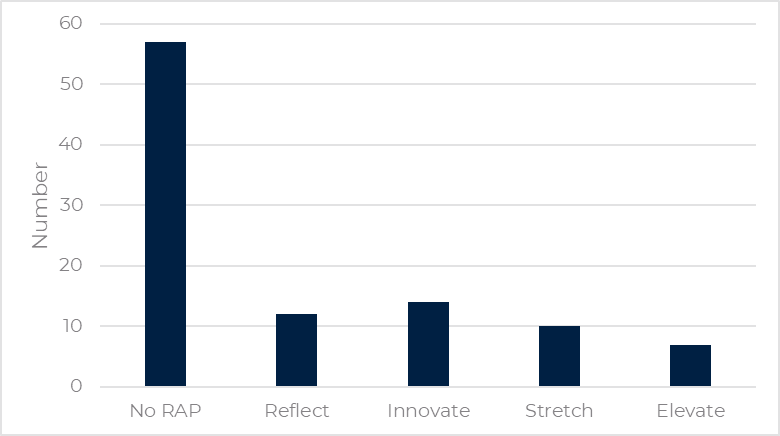
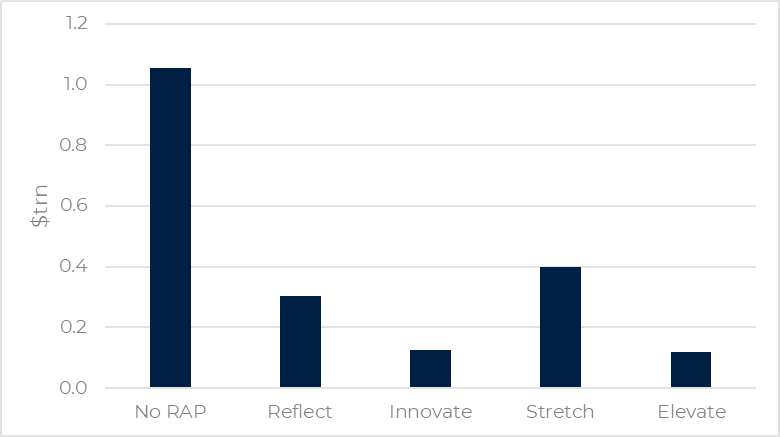
Corporate Performance and RAPsThere are presently 43 companies in the S&P/ASX 100 with RAPs in place. These companies are distributed across the Reflect, Innovate, Stretch, and Elevate stages. Notably, 57 companies in the ASX 100 do not have RAPs, suggesting that there is room for growth in corporate engagement in indigenous reconciliation. The breakdown of companies by RAP stage and their associated values in the ASX 100 is as follows:
Figure 1: S&P/ASX 100 RAP Breakdown (number)
Source: IRESS, Reconciliation Australia, Tyndall AM, Oct 2023. Figure 2: S&P/ASX 100 RAP breakdown (total market cap)
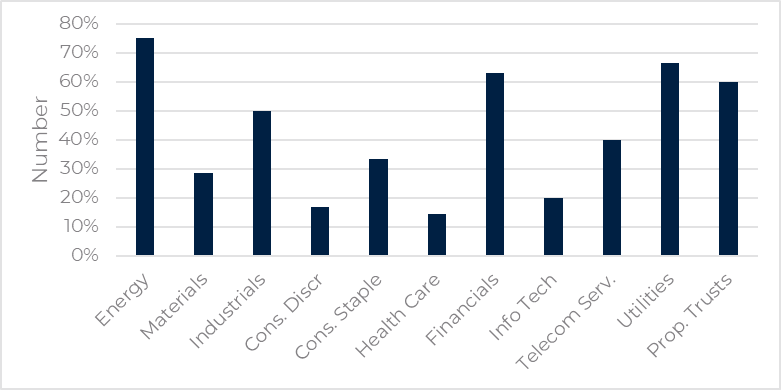
Source: IRESS, Reconciliation Australia, Tyndall AM, Oct 2023. Additionally, sector-wise analysis demonstrates varying levels of engagement with RAPs:
Figure 3: S&P/ASX 100 RAP breakdown by industry
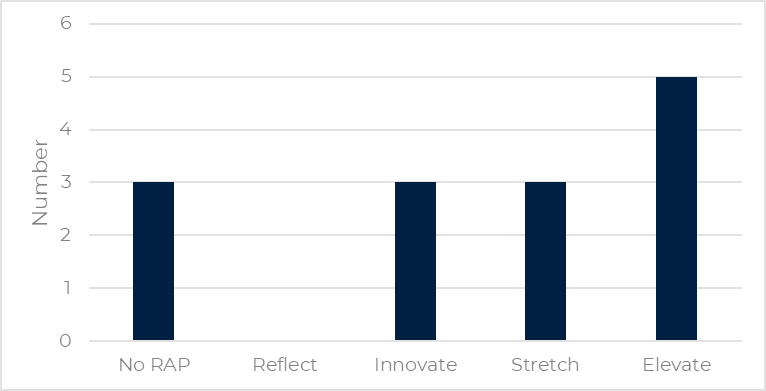
Source: IRESS, Reconciliation Australia, Tyndall AM, Oct 2023. Specifically relating to the Voice referendum, it is interesting to note that 14 of the top 20 listed companies in Australia have expressed public support for the Voice. Somewhat surprisingly, of these 14 companies only 11 currently have RAPs. Less surprisingly, none of those 11 companies are at the Reflect stage and the majority are at the Elevate stage or beyond - essentially companies that are more progressed in their own reconciliation journey. Figure 4: S&P/ASX 20 Voice Support
Source: IRESS, Reconciliation Australia, Tyndall AM, Oct 2023. Incorporating Reconciliation into our ESG approachESG has always been a critical part of the Tyndall investment process. More recently we have added structure to the process via the development of an ESG scorecard amongst other longstanding initiatives including active ESG engagement and independent thought on ESG related matters. While social issues and diversity and inclusion performance have always been considered, we have recently updated our scorecard to specifically reflect where companies are at in their RAP journey. Conclusion Regardless of the outcome of the Voice referendum, it is clear that corporate Australia will play an increasingly significant role in progressing indigenous reconciliation efforts. This includes fostering genuine relationships, creating inclusive workplaces, and supporting initiatives that empower Aboriginal and Torres Strait Islander peoples. The pre-Voice referendum assessment of Australian corporate performance in the indigenous reconciliation journey through RAPs reveals both progress and areas for improvement. While a notable number of companies have embraced reconciliation through the RAP framework, a significant proportion is yet to make a commitment. Encouragingly, there appears a growing understanding and acknowledgment of the need to meaningfully engage with indigenous communities. Author: Michael Ward, Senior Research Analyst Funds operated by this manager: Tyndall Australian Share Concentrated Fund, Tyndall Australian Share Income Fund, Tyndall Australian Share Wholesale Fund |

18 Oct 2023 - Performance Report: Cyan C3G Fund
[Current Manager Report if available]

18 Oct 2023 - Performance Report: Digital Asset Fund (Digital Opportunities Class)
[Current Manager Report if available]